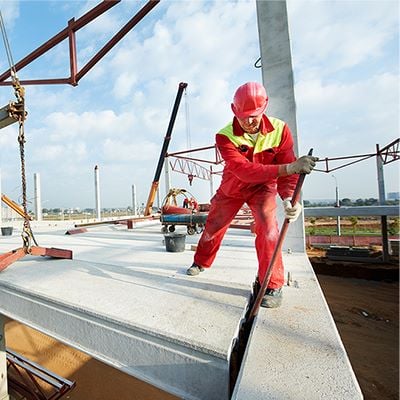

Due Diligence Requirement Only Applies to Certain High-Risk Sectors From 1 January 2026 This legislation applies to any domestic or foreign company that is directly or indirectly involved in the activities listed below that are carried out in the Flemish Region. In other words, it makes no difference whether you use the services of a Belgian or a foreign contractor or subcontractor: the legislation applies as soon as activities are carried out in the Flemish Region.
Youri De Vos, General Manager at Mordant Group, is structurally supported with the accountancy advice from one-stop shop Grant Thornton.
The De Wever government is raising tax rates on profit distributions for small companies, placing an extra tax burden on SMEs. According to Frederik De Graeve, these measures aren’t a fair reform, but a quick fix for budget problems that are affecting the entire economy. The tax rate increases are being sold as a fight against abuse, but in reality they hit every small business. This policy leads to lower investment, higher prices and a general tax increase that affects entrepreneurs, employees and consumers. Frederik calls for a targeted and consistent approach to abuse, rather than general tax increases.
"Flanders is introducing stricter rules on chain liability in the event of illegal employment from 2026. Contractors and principals are to become criminally liable if they do not sufficiently check whether their subcontractors employ foreign workers legally. The new legislation imposes an extensive due diligence requirement, with mandatory documentation and an obligation to report to the social inspectorate. Non-compliance can lead to heavy fines or imprisonment."
Share-based payments have become increasingly popular over the years, with many entities using equity instruments or cash and other assets based on the value of equity instruments as a form of payment to directors, senior management, employees and other suppliers of goods and services.
We are pleased to announce the release of our 'IFRS Example Interim Condensed Consolidated Financial Statements 2025'. This publication is designed to support our clients in achieving high-quality and consistent application of IFRS standards. The Interim Financial Statements cover a six-month period starting from January 1, 2025, and have been meticulously updated to incorporate the latest changes in IAS 34 and other relevant IFRS effective for the year ending December 31, 2025. This resource serves as both an educational tool and a practical guide, illustrating typical transactions across various non-specialist sectors. While it provides a comprehensive example, we acknowledge that specific circumstances may require different approaches. We hope this publication will be a valuable asset for your financial reporting needs.
The European Parliament has voted to approve the "Stop the Clock" directive, part of the Omnibus I proposal, which delays the Corporate Sustainability Reporting Directive (CSRD) for certain entities until 2028. This directive aims to simplify existing legislation and boost EU competitiveness. The article provides an overview of the revised CSRD timeline and offers recommendations for companies to maintain focus on sustainability.
Learn about the benefits of mandatory e-invoicing in Belgium, set to enhance efficiency, reduce VAT fraud, and support digital transformation
Explore the evolving landscape of car expenses tax deductibility, including new rules for non-zero emission and hybrid cars, and what you need to know for corporate and personal tax purposes.
On 26 February 2025, the European Commission (EC) released a new package of proposals (the Omnibus) to amend some key pillars of the European Green Deal. These are the Corporate Sustainability Reporting Directive (CSRD), the Corporate Sustainability Due Diligence Directive (CSDDD), and the Taxonomy Regulations. Additionally, the Omnibus proposes amendments to other aspects of European Union (EU) regulation. These proposals will now be submitted to the European Parliament for adoption in approximately four weeks’ time.
What new measures does your company have to take into account in 2025? Social dumping not only puts pressure on employees but also disrupts fair competition among businesses. In this article, you can read about the latest measures that compel businesses to respect social standards and thereby create a level playing field in the struggle against exploitation and unfair competition. Is your company’s business model compliant with the new rules of the game?
From 1 January 2025 Flanders is to tighten up the regulations governing sequential liability in the event of illegal employment. Read about the new duties of care for contractors, the extension of scope to include the self-employed, and the possible severe sanctions in the event of infringements
Rising inflation has unexpectedly affected many Belgian companies, causing some to lose their ‘small company’ status under the Companies and Associations Code (CAC). In response, the European Commission updated the criteria in 2023, with new thresholds for turnover and balance sheet totals effective from 2024. These changes aim to alleviate the administrative burden on companies and ensure compliance with financial regulations.
Discover the new rules on financial subcontracting in the construction, meat and house removal sectors from 2025. Find out how this legislation tackles social dumping and what sanctions apply.
‘From 2025, there will be significant changes to Belgian VAT regulations. Read more about the new filing deadlines, penalties for late filing and payment, automatic direct debit of VAT payments, and monthly refund of VAT credits'