We asked the 3,500 business leaders who responded to our latest Grant Thornton International Business Report (IBR) a new question in Q4-2013: Do you expect rising energy costs to constrain the growth of business over the next 12 months?
The lure of China’s less well-known cities and the opportunities they present has been picking up speed for years, along with their impressive growth. In fact, while they are often described as ‘second-tier’ cities, many are in fact now wealthier than their ‘first-tier’ counterparts.

The economy of France continues to suffer as the eurozone crisis continues. Following a deep contraction in 2009, the economy recovered robustly, posting seven consecutive quarters of expansion. However, France has stagnated over the past two years as problems in southern Europe intensified, with growth slowing as unemployment and government debt rise.
Sweden is an open, trade-oriented economy with a strong emphasis on supporting enterprise. It is therefore perhaps unsurprising, if still pleasing, to find the economy ranked third for the dynamism of our business operating environment in the Grant Thornton Global Dynamism Index (GDI) 2013. We are behind only Ireland and Canada on this measure in the 60-economy study.
I was interviewed this week by CNBC and BBC World News to discuss the economic outlook for 2014, drawing on the views of 3,500 senior executives in 45 economies we interview for our International Business Report (IBR).
Israel is a major player in science & technological innovation. In fact, perhaps only the United States is more prominent globally.
The Philippine economy is growing fast. GDP expanded by 6.8% in 2012 and, whilst remittances climbed to a record high of US$23.8 billion in 2012, their share of GDP actually dropped to 8.5%, down from 9% in 2011.
Business optimism in markets such as China, the UK and the US has risen markedly over recent months according to the Grant Thornton International Business Report (IBR)[1]. And the most interesting aspect for me is the contribution of the real estate and construction sector to the brightening economic outlook.
The outlook for the cleantech sector looks to be improving. While the Climate Policy Initiative reported that global climate finance flows had plateaued at US$359bn in 2012, business growth indicators from our Q3 International Business Report (IBR) are positive, particularly as regards investment and R&D, although a shortage of talent remains a challenge
Business leaders in the hospitality & tourism sector are continuing to do ‘more with less’ according to the Grant Thornton International Business Report (IBR) Q3 results. Expectations for business growth remain robust, but job creation is fairly stagnant, reflecting a broader drive for efficiencies within the sector.
I was interviewed last week by CNBC and BBC World News[1] to discuss our Q3 International Business Report (IBR) results. The big surprise was that business optimism in the UK more than doubled over the past quarter.
The Chinese economy is slowing. The days of rampant, double-digit expansion are in the past as we move away from massive investment and export dependency towards a more sustainable, consumption-driven model of growth. This rebalancing offers both challenges and opportunities for dynamic organisations. How these businesses adapt to the changing environment will be key to their growth prospects.
Global tax newsletter is designed to keep you up to date with significant tax developments around the world that impact businesses with cross-border operations. It addresses issues of a global nature as well as domestic tax developments of interest to foreign investors. The newsletter aims to cover tax developments on a regional and international basis.
There was some great news for Chile in the latest edition of the Grant Thornton Global Dynamism Index (GDI): we ranked second out of 60 economies, behind only Australia.
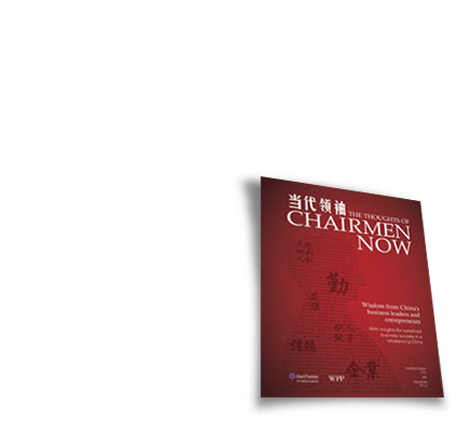
John Geldart has spent a lot of time in China over recent years. It is an amazing country which fascinates and surprises him every time he returns, but perhaps no more so than over the past few months when he has been lucky enough to interview the chairmen of some of its most dynamic companies.
Fraud is endemic in the construction industry. So much so that in many parts of the world it is seen merely as a ‘cost of doing business’. But this does not have to be the case. In a report released this week, ‘Time for a new direction – Fighting fraud in Construction’, we recommend a number of concrete steps companies can take to avoid becoming victims of fraud.