According to our Global Dynamism Index (GDI) 2013, Australia is the economy businesses should be looking at. It climbed to the top of the ranking of 60 of the largest economies in the world this year, up from seventh place in 2012.
Last month I chaired a panel of leading figures from the Private Equity (PE) sector to launch our 2013/14 Global Private Equity report: ‘A time of challenge & opportunity’.

Is there light at the end of the tunnel for the food and beverage sector? Certainly our new report on the health of the sector – ‘Hunger for growth: Food and Beverage looks to the future‘ – suggests so.
Private equity firms around the world are adapting to a 'new fundraising road map', according to the Grant Thornton Global Private Equity Report 2013/14.
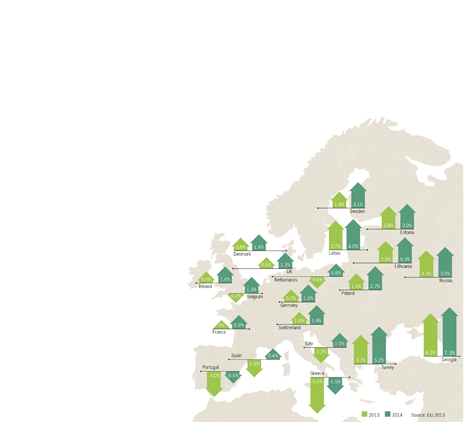
Presidential elections in some of the world’s largest economies, the sovereign debt crisis and the US fiscal cliff have all contributed to a global sense of economic uncertainty. How are major and developing markets faring in the face of these developments and what does the year ahead have in store?
The economy of France continues to suffer as the eurozone crisis continues. Following a deep contraction in 2009, the economy recovered robustly, posting seven consecutive quarters of expansion. However, France has stagnated over the past two years as problems in southern Europe intensified, with growth slowing as unemployment and government debt rise.
In the second of our Future of Europe series, we look at three aspects of the sovereign debt crisis: the stagnation of the region’s economies, closer integration and the future expansion of Europe.
The appetite for cross-border deals has rocketed by 18% during the past 12 months. This is the key finding from our latest research that looks at attitudes to mergers and acquisitions (M&A) among business leaders worldwide.
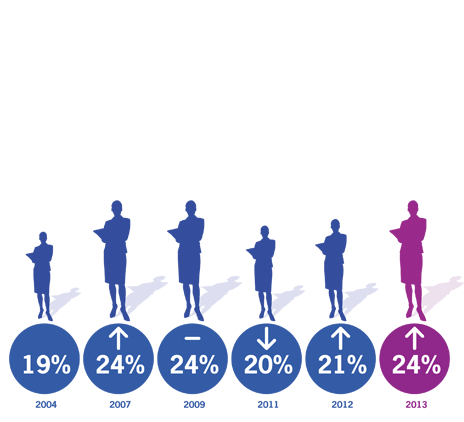
Our International Business Report with insights gained from in-depth interviews with five senior female executives from around the world, this report looks at the role of education in improving female participation and how this can help boost business growth.
For tech companies, the regulatory environment is tougher now than ever before. To protect national interests, governments are using compliance to restrict companies that could potentially disrupt established industries which can creating a knock on effect for tech companies. Rapidly expanding companies also face a wider range of individual regulations as they expand into new territories, be it employment law, taxation, product safety or licensing.
Business-minded technologists have always planned for global business empires. It used to take decades before they could grow globally. Today, it can be more or less instantaneous – creating a new set of opportunities and threats.
As global attitudes towards tax change, tech companies need to future-proof their tax practices to stand up to enhanced scrutiny. The way in which companies markets and sells its services can also have tax implications. Therefore, one thing is clear – tax matters, and ambitious tech companies need to develop a tax strategy that can keep pace with their growth aspirations.
Scaling a tech business is like walking a burning tightrope. The faster you go, the more you risk falling off. But go too slowly and the rope will burn through.
Last week, we released the results of the Grant Thornton Global Dynamism Index (GDI) 2013. This is the second year we have released these results. We are seeing the beginning of trends in the data but there was also some interesting movement up and down the rankings.
Stefano Salvadeo was interviewed on Focus Economia di Radio 24 recently to discuss some positive indicators regarding M&A activity in Italy.
Thinking outside the Big Blue box. Scott Barnes responds to UK Competition Commission proposals.