Energy costs are a major concern for businesses in Italy: close to two in five business leaders expect rising energy costs to hinder growth over the next 12 months (38%) according to our Q1 International Business Report (IBR) results. This is above the global (35%) and EU (31%) averages and reflects the higher price of energy in Italy compared with the rest of Europe.

You may well have seen the news last week that the European Parliament approved a package of accounting reforms relating to the relationship between Public Interest Entities (PIE) and their auditors operating within the European Union.
We launched our annual M&A report – ‘Dynamic businesses at the forefront of M&A optimism’ – in Hong Kong last week. The report has provoked a good deal of debate and I just wanted to share two highlights from the data.
The economy expanded by an estimated 4.5% in 2013, the fastest rate since the financial crisis. Oil and gas remain central to the success of the economy – the price of oil remains well above US$100 per barrel and the UAE is thought to have the seventh largest reserves in the world (98bn barrels) – accounting for close to 50% of total exports.
Denmark has made some fantastic television dramas over the past few years. ‘The Killing’ and ‘Borgen’ have been compulsive viewing in the Lagerberg household. Both place intelligent, strident women as the main characters and, in the case of political drama, Borgen, imitate life itself by prophetically telling the tale of a female Prime Minister – Helle Thorning-Schmidt becoming the first Prime Minister of Denmark in 2011.
Dynamic businesses at the forefront of M&A activity highlights an increasing importance for M&A in driving growth. There is a clear acknowledgment from the 12,500 businesses surveyed that acquisitions will be needed to supplement existing operations.
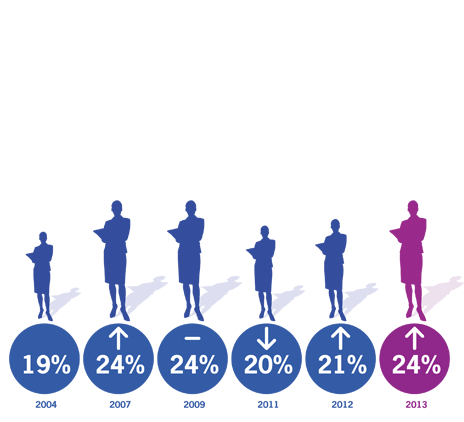
Just one in seven delegates at the annual World Economic Forum gathering was a woman this year. This statistic alone explains why the issue of women in businesses inspires so much passion and debate, emphasising that the path from the classroom to the boardroom is anything but straightforward.
I am currently at MIPIM, the annual gathering of property professionals from around the world, and can report that the mood is much improved from this time last year. Developers, property companies, investors and homeowners suffered disproportionately during the financial crisis.
24%: that is the proportion of women holding the most senior roles in businesses across the globe.
The financial crisis was devastating for the hotel industry as consumers and businesses pulled back on discretionary spending. However, the report we released this week ‘Hotel Investment 2014 – Finance on a different level‘ reveals that the impact of the crisis was not all bad – certainly in terms of placing the hotel financing environment on a more balanced and sustainable footing.
Developers, property companies, investors and homeowners suffered disproportionately during the financial crisis. But now, finally, expectations for profitability, jobs and orders are all on the rise.
Grant Thornton International Ltd has commented on the IASB Exposure Draft 'Proposed amendments to the IFRS for SMEs'.
Drawing on interviews with banks, private equity houses, advisers and hoteliers, the report calls for hotel businesses to address the way they deal with lenders and investors if they are to raise money in the new environment.
This publication summarises the overall objectives and requirements of IAS 36, provides a step-by-step guide to performing an impairment assessment (including recording or reversing an impairment when necessary) and offers insights on best practices to address interpretative and practical application issues.
This publication guides management through the top 20 disclosure and accounting issues identified by Grant Thornton as potential challenges for IFRS preparers.