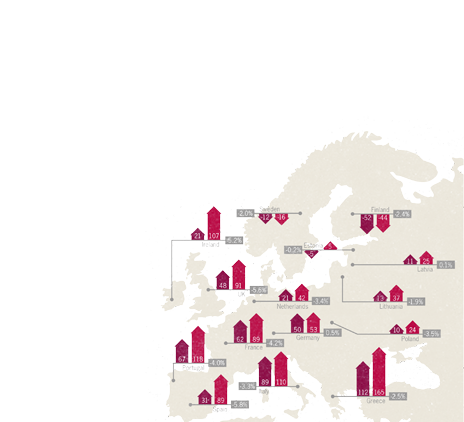
Having been Managing Partner of Grant Thornton Ireland for 9 years, I was naturally drawn to the mixed views of Irish businesses in our 2013 Future of Europe report which we released this week. The report revealed much support for what the euro has achieved, but very little appetite for further integration.
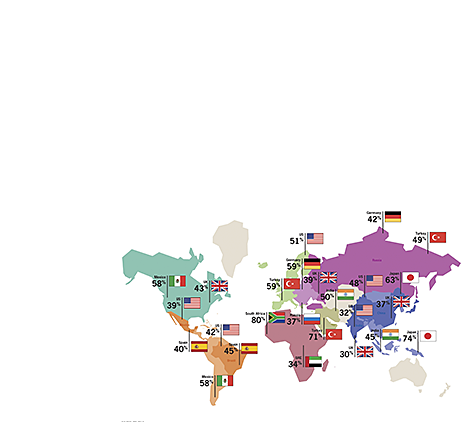
The Q1 IBR economic update contained a major surprise: For the first time, not one of the BRIC economies made it into the top five for business optimism.

The latest update from our International Business Report (IBR) provided some encouraging signs for the health of the global economy. On the back of easing demand conditions, both investment plans and business confidence are up.
Our annual look at M&A sentiment around the world shows that the shift in acquisitive focus amongst businesses uncovered last year – from domestic to cross-border – is becoming increasingly popular as a key strategy for companies looking to facilitate growth.
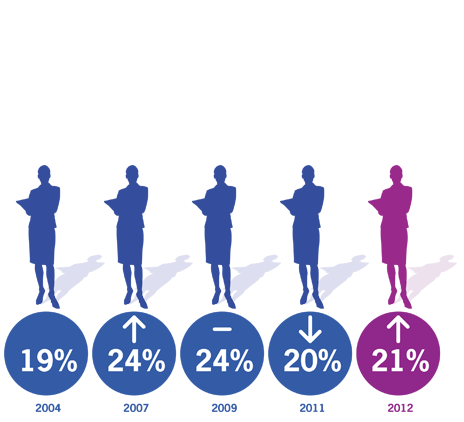
There was much cause for optimism in our annual look at women in business through the International Business Report (IBR). The survey reveals that the proportion of women in senior management roles has climbed to 24% (up from 21% in 2012), back up to levels seen before the financial crisis.
I confess to being somewhat surprised when I first saw the most recent data from our International Business Report (IBR), revealing that the number one recruitment challenge for business leaders is a lack of key technical skills in candidates.
On 18 January, the National Bureau of Statistics in China revealed that the economy’s working-age population shrank by 3.45m in 2012.
The big New Year business story was that politicians in the United States had pulled the economy back from the brink of the ‘fiscal cliff’, albeit slightly later than planned.
On the one hand, the results from our once-every-two-years look at the world’s leading emerging markets were encouraging. Business leaders across the world are looking at international expansion opportunities.
Monday night’s news that international lenders had reached an agreement on how to remedy Greece’s bailout programme, thereby releasing a delayed €34.4bn aid payment, was an important step for the future of the eurozone. But as the crisis drags on and growth rates continue to disappoint, the cost to businesses keeps on rising.
Economic slowdown hampering business growth efforts. Globally, business optimism dropped for the year ahead from net 23% in Q2 to net 8%, well below the 2010-12 average.
The London 2012 Olympic and Paralympic Games were widely regarded as a huge success. Spectators, officials and competitors alike praised not just the efficiency of organisation, but the spirit in which the games were held.
The past 12 months have seen women take the lead in some of the toughest economic and political environments, and they also head governments in countries such as Argentina, Australia, Brazil and Thailand.
Through our International Business Report we’ve been keeping track of global figures on the appetites for both domestic and cross-border transactions since 2008.
Recovery from the financial crisis remains uncertain across both mature and emerging markets. During the past 12 months we have seen volatile commodity prices, disruptions in supply chains, political uprisings and natural disasters.
In 1951, in the aftermath of the Second World War, Belgium, France, Germany, Italy, Luxembourg and the Netherlands came together to found the European Union.