Thinking outside the Big Blue box
Blog
Thinking outside the Big Blue box. Scott Barnes responds to UK Competition Commission proposals.

Thinking outside the Big Blue box. Scott Barnes responds to UK Competition Commission proposals.

These are the results of the Grant Thornton Global Dynamism Index (GDI) 2013, an annual research project designed by the Economist Intelligence Unit, which ranks the development of the business growth environments of 60 of the world's largest economies over the past 12 months.


A lot has been written about auditor rotation over recent months, but in August, India became the latest major economy to actually enforce mandatory rotation. This is big news. And not just for us accountants.

Businesses in the hospitality & tourism industry are the most bullish globally on the outlook for both revenues and profits. That’s according to the Q2 International Business Report (IBR[1]) results, providing further evidence of strong performance in the industry.

Reviewing the Q2 International Business Report (IBR[1]) results, I was pleased to see some good news for construction & real estate companies: Profitability expectations around the world are up. However, my optimism is tempered somewhat by recent news from China and it will be interesting to see how businesses react in Q3.

The issue of transfer pricing has hit the headlines in the UK and the US over recent weeks due to the relatively low level of corporation tax multinationals such as Amazon, Apple, Google and Starbucks.

The brightening outlook for Spain. Rising exports amongst reasons to be optimistic

Dynamic organisations need to apply both reason and instinct when making business decisions is the cornerstone of our 2012 advertising campaign.

At a time when China and the EU are arguing over solar panel subsidies and shale gas has revolutionised the US – and perhaps soon the global – energy market, I was encouraged to see the general optimism amongst cleantech businesses in the Q2 update from our International Business Report (IBR).
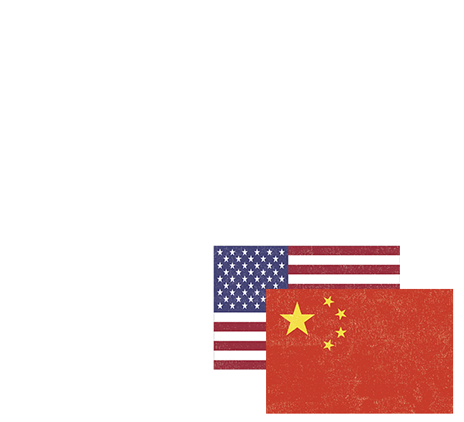
This time last week I was interviewed by Bloomberg and CNBC to discuss a divergence in business optimism between China and the US revealed by our Q2 International Business Report (IBR). The results were surprising: Chinese business optimism is at an all-time low whilst their US peers are more optimistic than at any time since 2005.



Grant Thornton understands that multinational tax challenges are among the most complex and expensive issues facing companies with international operations. And expatriate tax issues are a key consideration for companies working across borders.