Priorities for tomorrow’s unicorns
Tax
For tomorrow’s billion-dollar tech companies, the challenge and complexity of tax should never be underestimated.

For tomorrow’s billion-dollar tech companies, the challenge and complexity of tax should never be underestimated.

As productivity rates fall, businesses and governments need to find new ways to make inputs work harder if living standards are to be maintained.

Tomorrow, we can expect new technologies enabling the internet of things to create opportunities for future fast-growth companies. Some will become industry leaders – the Xiaomis and Ubers of tomorrow. Many more will fail – either because their offering wasn’t differentiated enough, or because their management made the wrong decisions.

Cyber-attacks are set to grow in their number and nature; those companies that embed security measures into their culture will be most successful at fending them off, says Paul Jacobs

New research from Grant Thornton reveals that cyber attacks are taking a serious toll on business, with the total cost of attacks globally estimated to be at least US$315bn* over the past 12 months. The Grant Thornton International Business Report (IBR), a global survey of 2,500 business leaders in 35 economies, reveals that more than one in six businesses surveyed faced a cyber attack in the past year. With high-profile security breaches and hacks becoming more prevalent, nearly half of firms are putting themselves in the firing line with no comprehensive strategy to prevent digital crime.

Low productivity growth is a concern for policymakers across the globe. Steve Perkins, global leader for technology, says boosting R&D is the way to compensate for ageing populations and slower employment growth.
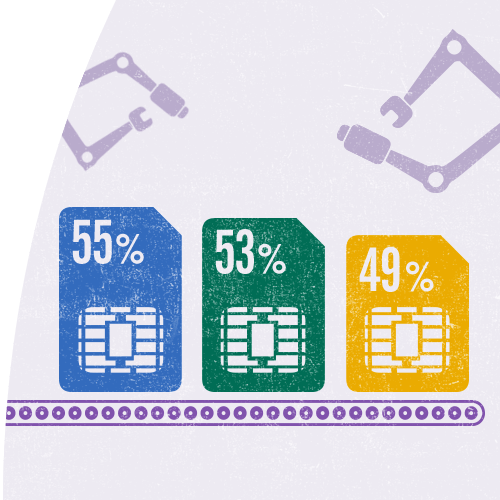
Rising labour costs and the quest for productivity are driving businesses to automate. Finding new roles for redundant workers will be the next challenge.

Fifty years on from the world’s first personal computer going into mass production, the Grant Thornton International Business Report reveals the scale of technology’s influence on business with the majority of firms now planning to automate operations and practices, potentially resulting in job losses.

Rob McGillen, global head of technology at Grant Thornton, asks how important ICT infrastructure to business growth prospects and which economies are performing best.

Poised to be every bit as disruptive as the internet revolution, is your business ready for the rise of the sharing economy?

Technology is at the cutting edge of efforts to make growth more sustainable. As the global population swells and more people move into higher consumption classes, the demand for food, for energy, for water, will all increase. But the resources our planet offers will not. Clearly the status quo is not sustainable.
Grant Thornton looks at the potential impact of IFRS 15 'Revenue from Contracts with Customers' for revenue recognition in the software and cloud services industries.

The technology sector is riding the crest of a wave. We interview approximately 150 technology companies around the world every quarter through our International Business Report (IBR) and what’s struck me since the beginning of the year is how bullish the leaders of these companies are about their growth prospects.
The technology industry is synonymous with innovation, fuelled by investments and a continual focus on research and development (R&D). By its very nature it is at the forefront of change. Those businesses which fail to keep up with technological change and stay current with consumer requirements are left behind.

For tech companies, the regulatory environment is tougher now than ever before. To protect national interests, governments are using compliance to restrict companies that could potentially disrupt established industries which can creating a knock on effect for tech companies. Rapidly expanding companies also face a wider range of individual regulations as they expand into new territories, be it employment law, taxation, product safety or licensing.

Business-minded technologists have always planned for global business empires. It used to take decades before they could grow globally. Today, it can be more or less instantaneous – creating a new set of opportunities and threats.